For several years now, digital sovereignty has become an increasingly pressing concern for French CIOs and CISOs.
For some organizations, the issue now goes far beyond simply choosing a hosting provider or a collaborative suite: it's about regaining control over the entire IT stack, including critical components like identity and access management.
This is precisely the context in which Jamespot and MIA began working together.
Founded in 2005, Jamespot is one of the French pioneers in collaborative tools and digital workplace solutions. The company, which now employs more than 40 people, has grown around a strong conviction: putting people back at the center of organizations' digital tools.
Unlike highly standardized collaborative suites, Jamespot offers a sovereign digital workplace that is modular and customizable, designed to adapt to real business needs and organizational culture. The solution is built around several complementary components: a collaborative intranet, social network, office suite, and now a sovereign multi-LLM platform to govern the use of artificial intelligence within organizations.
With more than 350 client organizations and approximately 400,000 users worldwide, Jamespot serves private companies, public administrations, and non-profit structures alike. Its clients include the Assurance Maladie, GHT Bourgogne Méridional, AFCDP, the Ministry of the Environment, the Budget Directorate, and several other French public bodies.
But beyond features, Jamespot above all carries a strong vision of sovereignty and digital responsibility. For them, sovereignty is not a marketing argument. The goal is to concretely align their IT stack with that vision: reducing critical dependencies on major American platforms, favoring European technologies, and ensuring better control over client data. In practice, this means no structural dependency on Google or Microsoft in their day-to-day work environment.
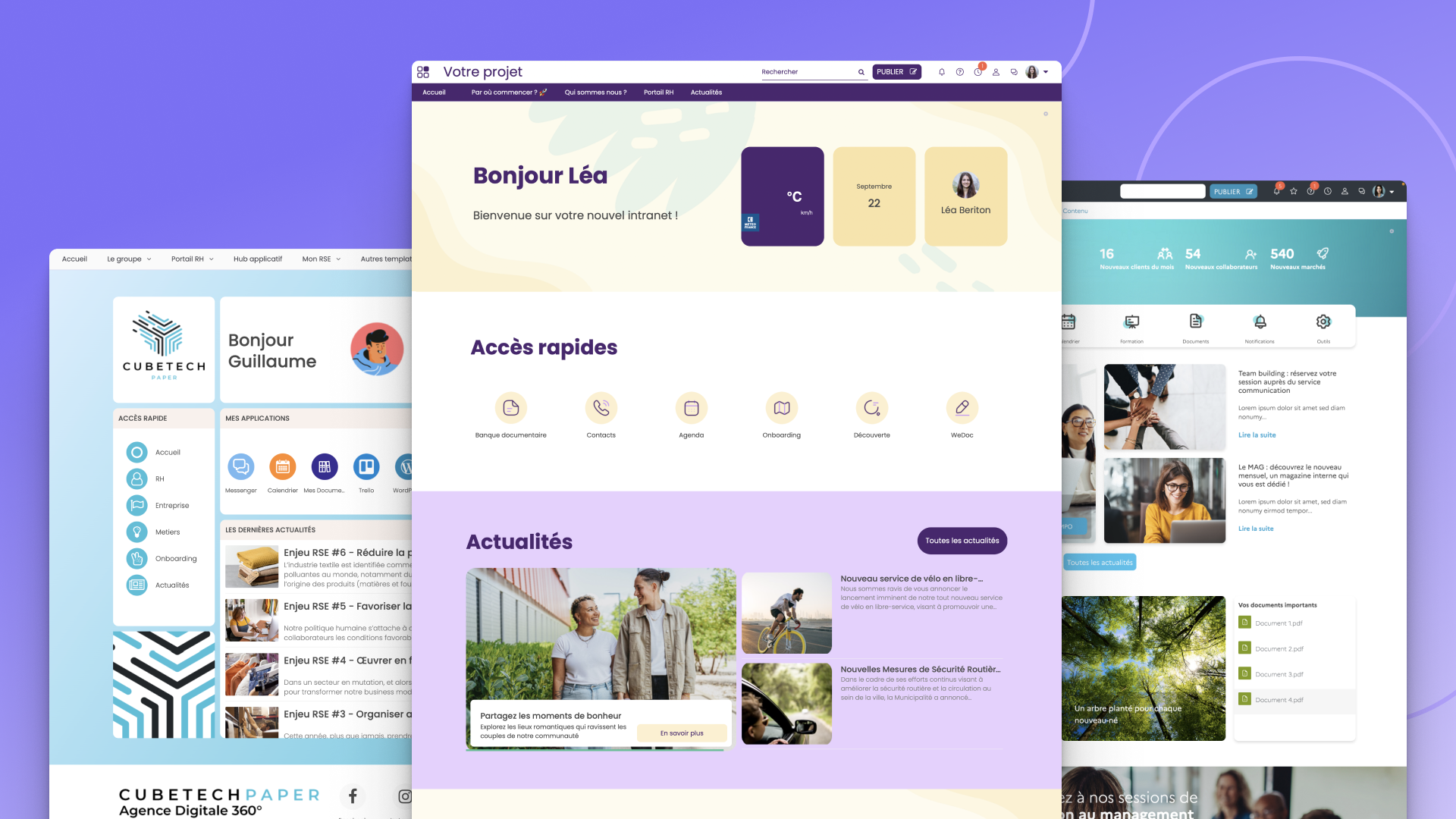
Replacing Microsoft 365 or Google Workspace is a first step. But when an organization decides to build a truly sovereign stack, it also needs to rethink identity and access management. This is precisely where MIA stepped in for Jamespot.
When our teams started working together with Pascal, Jamespot's CISO, access management relied primarily on email exchanges, manual approvals, and several Excel spreadsheets used to track account openings, employee offboarding, and access reviews.
This is an extremely common setup in French SMEs and mid-sized companies, particularly when they don't want to rely on traditional American IAM solutions. The problem wasn't a lack of organization — Jamespot didn't need us to achieve ISO 27001 certification — but rather the gradual accumulation of manual operations: back-and-forth between HR and managers, scattered approvals, duplicate data entry, poor traceability, and time-consuming access reviews.
The richer the application stack becomes, the harder this approach is to sustain over time. Especially when you can't fall back on an American IdP.
The question naturally came up. But for Jamespot, several factors made these solutions a poor fit.
First, because these platforms are typically designed for much larger organizations, with significant implementation costs and technical complexity for a mid-sized structure. And above all, because they are American vendors.
Jamespot's goal was precisely to build consistency between their sovereignty positioning and their actual technical reality. The decision wasn't purely about budget or features. It was also strategic.
MIA was designed from the ground up with a different approach: enabling organizations to centralize and automate access management without structurally depending on Google or Microsoft SSO. The goal is not to recreate a single massive point of dependency, but to let companies retain control over their identities and access workflows.
As part of this collaboration, several sovereign connectors were developed or strengthened to integrate into a primarily French and European stack: Jamespot, Alinto, Lucca, Passbolt, and other European SaaS tools used by the teams.
Today, MIA enables organizations to automate account creation and deactivation, centralize access requests, manage access reviews, track approvals from application owners, and maintain a complete audit trail of all operations. The main benefit is operational: less duplicate data entry, fewer email threads, less information loss, and better overall visibility into access rights.
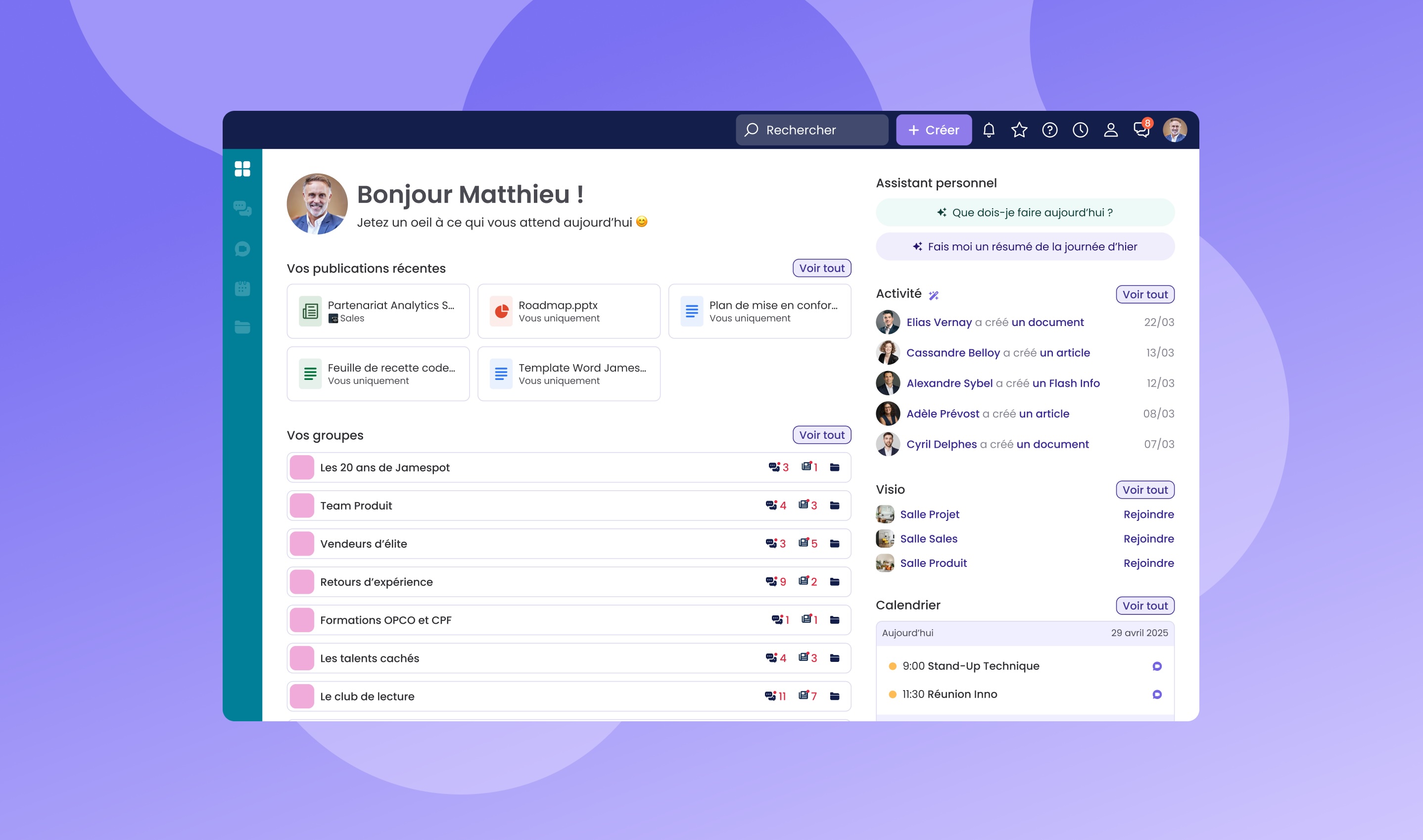
One of the core objectives of the project was to ensure global consistency. Because using a sovereign digital workplace that itself depends on American IAM components quickly creates a technical and strategic contradiction.
With this approach, Jamespot and MIA instead build a coherent chain: French hosting, European technologies, full data control. On MIA's side, this means hosting on OVHcloud and an architecture deliberately independent from major American Identity Providers.
For a long time, many organizations believed there was no credible alternative to the major American players. That reality is changing fast. A genuine European ecosystem is emerging around key areas such as collaboration, AI, cybersecurity, access governance, and document management.
The collaboration between Jamespot and MIA reflects this shift: French companies looking not only to host their data in Europe, but to progressively regain control over their entire digital architecture.